


Officially presented at the 134th Korean Ophthalmological Society Meeting as a cataract research finding.
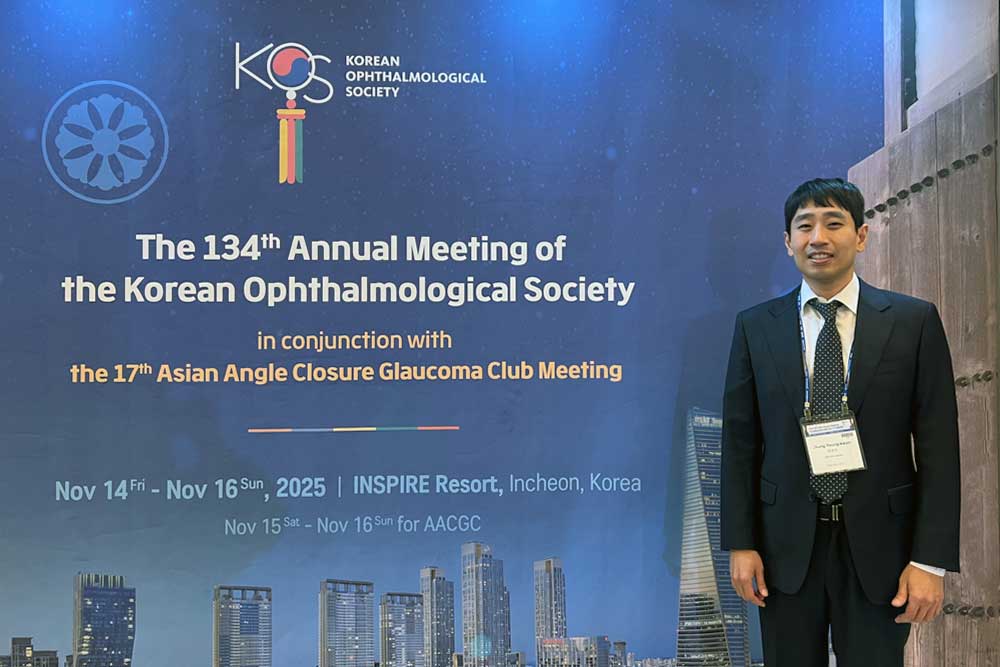
Dr. Young-kwon Jung’s cataract research was officially selected and presented at the 134th Meeting of the Korean Ophthalmological Society, held from November 14 to 16, 2025, at the Inspire Resort in Incheon.
This study analyzed distance and near vision outcomes in patients who previously underwent LASIK or LASEK and later received presbyopia–cataract surgery using the PureSee intraocular lens with a near-vision target. The research also examined the key factors influencing these visual outcomes.
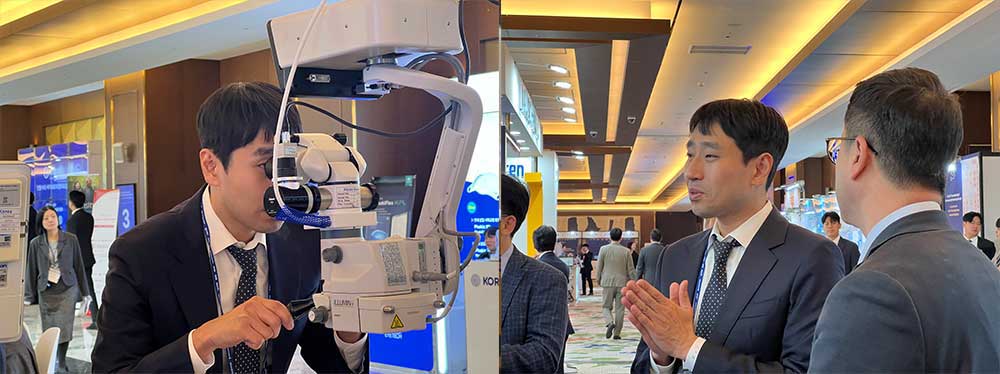
The study included patients who underwent cataract surgery after previous LASIK or LASEK. Following phacoemulsification, the PureSee intraocular lens was implanted. We evaluated key ocular parameters such as corneal spherical aberration, axial length, corneal curvature, and the target diopter of the implanted intraocular lens. In addition, spherical equivalent values before and after surgery were analyzed, along with distance and near visual acuity measured one month postoperatively.
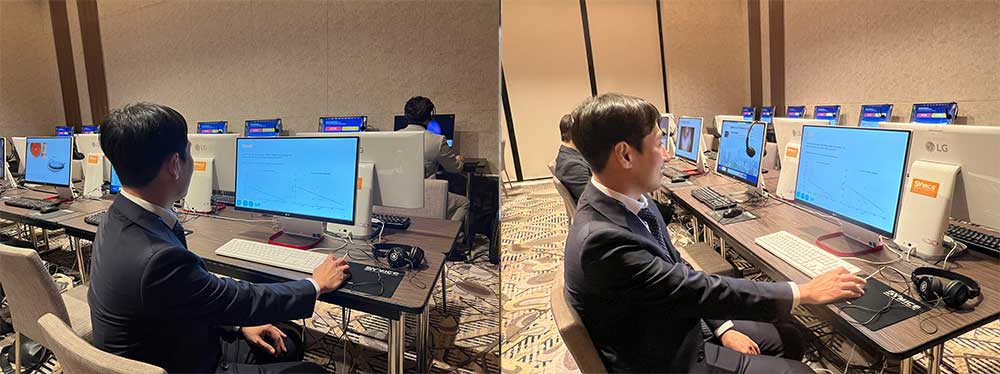
As a result, the study found that in eyes with flatter corneas, setting the surgical target toward near vision led to improvements in both distance and near visual acuity. In contrast, for eyes with steeper corneas, targeting a refractive outcome closer to emmetropia was shown to provide balanced and satisfactory vision at both near and distance.
These findings demonstrate that achieving high patient satisfaction in presbyopia–cataract surgery depends on carefully analyzing the corneal condition—including corneal curvature and spherical aberration—prior to surgery, and precisely determining the target diopter accordingly.
EOS Eye Center operates a dedicated Post-LASIK/LASEK Cataract Center and a Custom Lens Fitting Center, and continues its ongoing research to deliver precise, reliable, and highly satisfying outcomes in presbyopia–cataract surgery.