

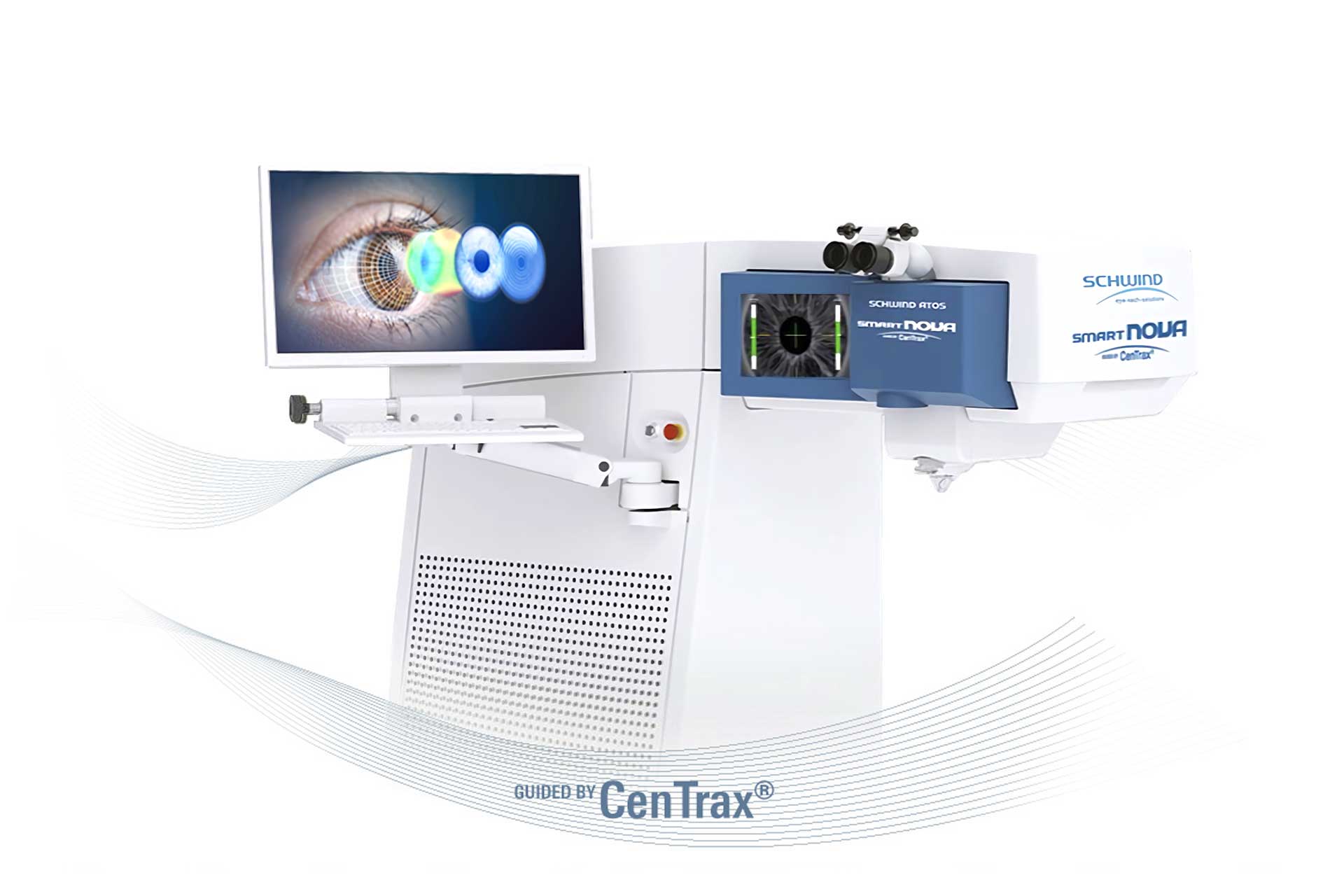
01. Real-Time Centration System
CenTrax automatically detects pupil movement to precisely align the treatment center, compensates for cyclotorsion, and corrects residual alignment error after docking. This helps prevent higher-order aberrations and residual astigmatism caused by decentration.
It also detects subtle intraoperative eye movement, changes in intraocular pressure, and momentary changes in corneal shape in real time, helping minimize treatment error and support stable outcomes.
Two-Step Precision Alignment System from Visual Axis to Cyclotorsion Correction
Before Docking
Automatically links Sirius data to perform the first visual-axis confirmation.
After Docking
Links examination data after docking and enables secondary visual-axis and centration correction.
Laser Delivery
- Automatically compensates for subtle visual-axis movement during surgery.
- Applies a 7-dimensional eye-tracking system.
- Tracks subtle movement after docking and reflects it in the laser head system.
02. Asymmetric Spot Pattern & Low Dose Laser
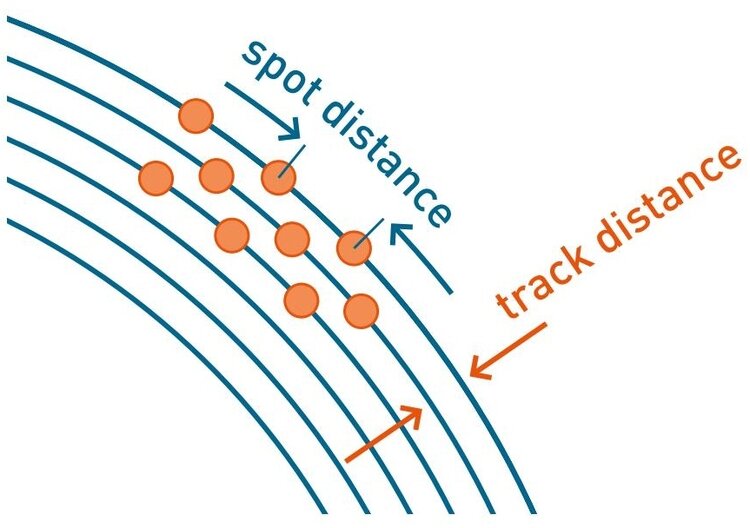
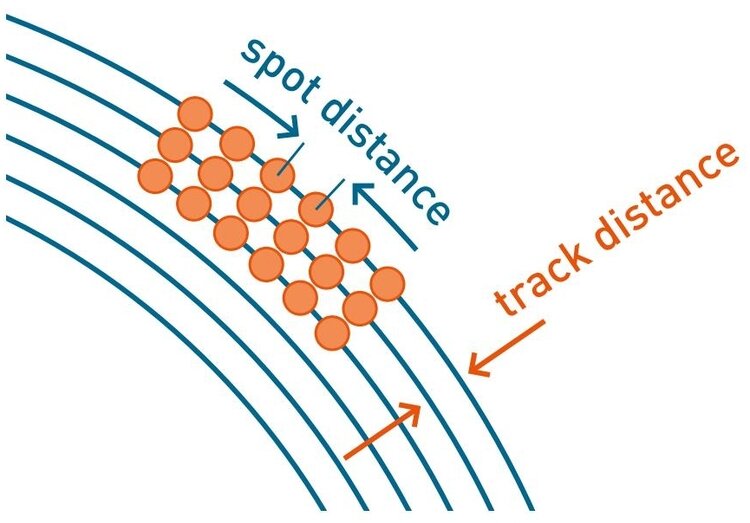
The Smart Nova Pro uses minimal laser energy and an asymmetric spot spacing pattern to distribute laser energy more evenly and smoothly across the cornea. This helps create a flatter, more stable lenticule interface, supporting faster visual recovery and stable outcomes.
Asymmetric Spot Spacing
Symmetric Spot Spacing
03. EOS Eye Center Smart Nova Pro CMT System
Smart Nova Pro precisely measures the patient’s visual axis, projects the data directly onto the cornea, and supports a fully automated surgical workflow.
Capture
Create a corneal centering map
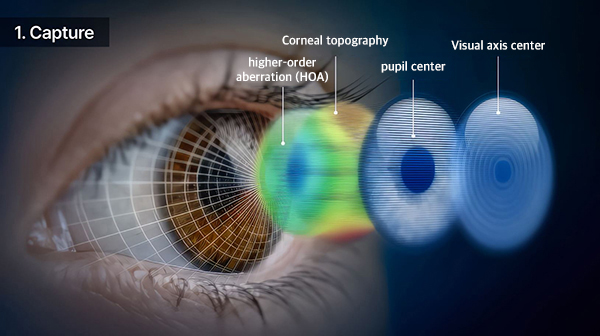
Sirius corneal topography and wavefront diagnostic data are used to precisely measure the corneal topography and visual-axis center.
Pupil position, corneal shape, and iris location are analyzed to identify accurate visual-axis coordinates.Match
Project the centering map onto the eye
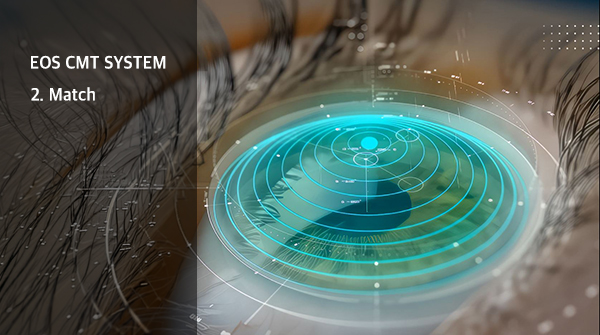
Captured data is transferred to the ATOS system and projected onto the patient’s cornea while the patient is positioned on the surgical bed.
The centering map is applied based on data transferred to the ATOS laser.Treat
Real-time visual-axis linkage and laser delivery
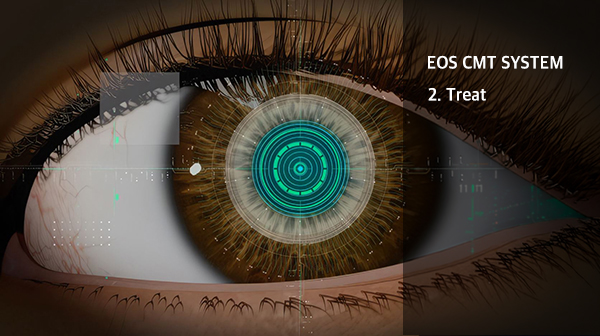
All preoperative measurement data is matched directly onto the cornea in the surgical field, enabling fully automated treatment without manual adjustment.
Even with significant eye movement or poor cooperation, eye tracking is applied throughout the procedure for accurate laser delivery.04. SMILE LASIK vs Smart Nova Pro
SMILE LASIK with Smart Nova Pro technology helps prevent limitations associated with conventional SMILE LASIK and supports enhanced visual quality.
Conventional SMILE LASIK
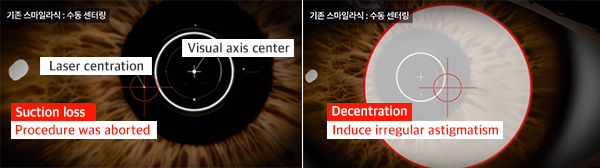
Conventional SMILE LASIK may be affected by sudden eye movement or blinking, which can lead to suction loss. Incorrect laser centration may also cause decentration and incomplete laser delivery, potentially resulting in postoperative irregular astigmatism.
EOS Smart Nova Pro SMILE LASIK
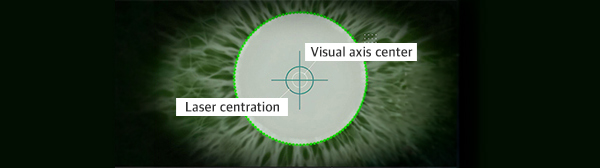
With EOS Smart Nova Pro technology, laser centration is completed through an automated Capture-Match-Treat workflow, helping prevent intraoperative decentration, suction loss, irregular astigmatism, and glare for improved outcomes.